

When the new ownership group took over Newcastle United, one of their most significant actions was to finally make the women’s team part of the club for good. Alongside that came the ultimate aim of taking that team all the way to the WSL through investment and hard work.
It’s safe to say that focus on the women’s team hasn’t once dwindled over the past few years but, despite heavy investment and a real determination to get the Lasses into the top flight, we are yet to see that come to fruition after a couple of underwhelming campaigns caused frustration.
But, with the Magpies starting this season with four wins from four in the league, could we finally be on the right track to see Newcastle United’s women’s team reach the promised land and fulfil the goals laid out for them when the takeover first happened?
The ambition that never left
It has always been clear that Newcastle United Women have had the ambition of being a staple WSL name. Ever since they were brought into the Newcastle United family back in 2022, that has been the goal.
The initial stages were characterised by a meteoric rise through the leagues, much improved facilities, a dedicated training base, and some hefty investment in the squad and backroom staff that paid off with back-to-back promotions.
But once the Magpies reached WSL2, there was a shift. Not because the ambition disappeared, not because the club were content with the work they had done to that point. But because promotion didn’t come as easy as before and, for the first time since the takeover, there was a roadblock that Newcastle didn’t quite know how to overcome.
Why has promotion been so difficult?
There isn’t some sort of unexplainable, deeply analytical reason that the progress stagnated so suddenly. It was simply just a product of the environment.
Back-to-back seasons saw a 5th and 6th-place finish respectively, neither of which were dire, but nor did they represent what the club was hoping to achieve.
Similarly to what we have seen in men’s football with the likes of Wrexham, when the going is good, finances are much greater, the squad is better than those around you, and you simply operate at a higher frequency than your opposition, racing through the divisions is easy.
But when the Magpies reached WSL2, they reached a bottleneck of clubs, many of which with WSL pedigree, all fighting for the same goal, with a much more level-playing field of resources than had previously been the case.
It’s not like the Lasses’ journey hasn’t come with highs, or even points when they thought promotion was going to happen. But for the most part their stint in the division has been characterised by a distinct lack of consistency and a goal-scoring record which never really resembled that of a promotion-winning side.
Why this year feels like the year
Newcastle have already proven that spending heavily isn’t enough to guarantee promotion, and when thinking about why this year feels different, it mainly comes down to the project feeling more mature.
Having spent the last two years adding high-calibre players in an attempt to close the gap to the WSL, this year has felt a little different.
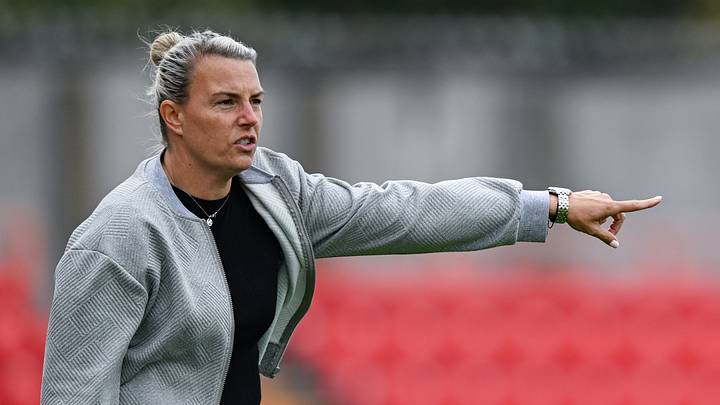
It stemmed from the approach which brought current manager Tanya Oxtoby to the club to succeed Becky Langley, who did such an excellent job of guiding Newcastle through the divisions.
There was an extremely measured, well thought out approach that included input from top voices all across the Newcastle United hierarchy. From CEO David Hopkinson, to sporting director Ross Wilson, to director of women’s football Grace Williams - there was a real understanding that the next decision could be crucial.
And that style of process has subsequently been applied to other areas, such as transfers.
Players have still been brought in, but there is now the feel of a side who seem like they have been assembled as a unit and collective rather than simply being individuals forced into an XI. The specific needs of the squad have been addressed, namely players like Kathleen McGovern and Martha Thomas who have already shown signs of improving the Magpies’ struggles in front of goal.
The project is now also being built upon the foundation of staying in the WSL rather than simply just getting there.
There is no longer a feeling of desperation about making the jump as soon as possible. Instead, it now looks like there is an understanding that if the project is built with the right structures and plans in place, then the goals will be reached without the need to force them into existence.
The infrastructure is being developed, with Newcastle securing a dedicated training base at Cochrane Park. There is a conscious effort to build up the fanbase and really interlink them with the men’s side of the club, such as the hosting of games at St James’ Park and shared marketing campaigns. There has been a real push to bring staff in who understand what it takes to help a club gain WSL status, like the aforementioned Grace Williams, who did so at Bristol City and Crystal Palace.
And, perhaps most importantly, there is an investment in the pathway for academy players, with Abbie Richardson recently becoming the first ever academy graduate to sign a professional contract with the club.
Now, all of that is beginning to really show itself on the pitch. As mentioned, the women have now won their first four games of the WSL2 season, scoring 11 goals, conceding just one and sitting pretty at the top of the table.
Of course, there is still a long way to go and there will be bumps in the road. But, as long as Newcastle United Women continues to behave like a WSL club and genuinely believe that is where it belongs - there is no doubt it won’t be long before they make the final jump on their journey to the pinnacle of English football.
 Add us as a preferred source on Google